
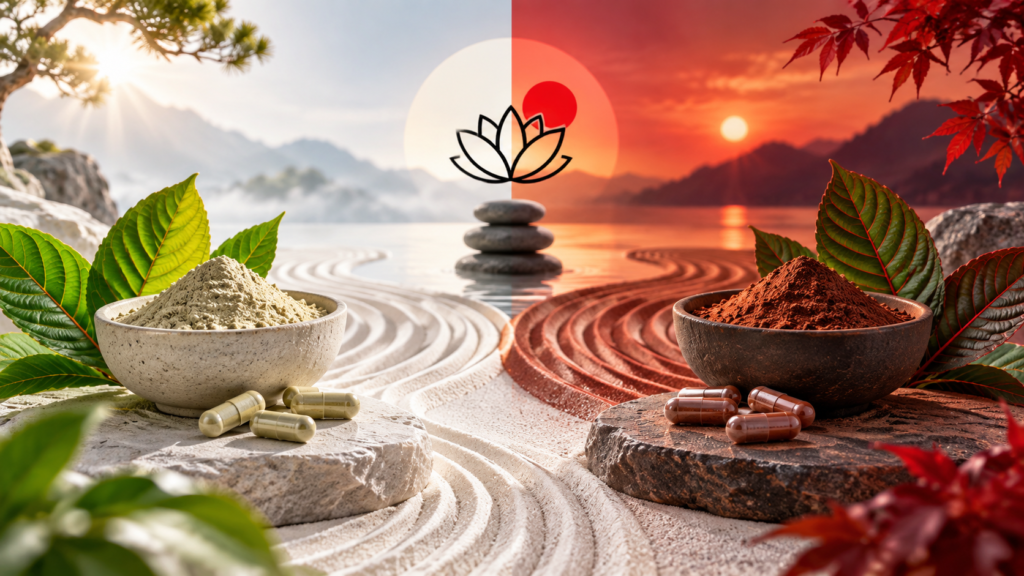
Kratom (Mitragyna speciosa) has become a popular substance globally, and the fans are frequently presented with an option between dissimilar types of the strain: mostly white, red, and green according to vein color.
Among them, the most significant comparison is white vs red kratom because these two types of the substance have significantly different effects and optimal applications.
In this blog, we’ll explore the properties, applications, and possible adverse effects of white and red vein kratom.
What Is White Vein Kratom?
The name of white vein kratom is acquired due to the pale color of the veins in the leaves of the plant. Such leaves are picked when tender and are likely to be higher in concentration of stimulant alkaloids such as mitragynine. White vein was initially thought to be among the more vigorous and stimulating types of kratom.
Typical characteristics of white vein kratom:
- Bright green to pale green powder color
- Higher mitragynine concentration relative to red vein strains
- Faster onset of effects that are generally stimulating
- Popular strains: White Maeng Da, White Thai, White Bali
Users often turn to white vein kratom as a substitute for caffeine or energy supplements, seeking enhanced focus, mental clarity, and alertness, particularly during the morning or as a pre-work supplement.
What Is Red Vein Kratom?
The red vein kratom is characterized by dark red vein color and usually by a slightly darker powder. These leaves are mostly those of older trees, and they are dried under the sun, which can affect the profile of the alkaloids used.
Red vein kratom features:
- Dark green powder with reddish hues
- Higher 7-hydroxymitragynine content linked to more calming properties
- Slower onset with longer-lasting effects, emphasizing relaxation
- Popular strains: Red Bali, Red Borneo, Red Maeng Da
People often take red vein kratom as an evening use or when they wish to enhance relaxation after a hard day, which corresponds to the effects of relaxing and calming down.
Benefits of White Kratom
White vein kratom’s benefits primarily center on its energizing qualities without the jitteriness often associated with caffeine:
- Clean energy boost: Supports alertness and stamina
- Improved mental clarity: Helps with focus during work or study
- Motivation: Encourages productivity and sustained engagement
- Mild euphoria: Can enhance mood and social engagement
- Non-drowsy: Typically avoids fatigue or sedation, suitable for daytime use
Users appreciate white vein kratom for these qualities, particularly those seeking a natural way to maintain wakefulness and cognitive function.
Benefits of Red Kratom
Red vein kratom’s benefits are generally more aligned with relaxation and comfort:
- Promotes relaxation: Aids unwinding after effortful days
- Supports restful sleep: Often used to enhance nighttime routines
- Soothing effect: Mildly relaxes muscles and eases daily tension
- Sustained calm: Effects last longer compared to white vein strains
- Mild mood enhancement: Supports a sense of peace and well-being
Its soothing qualities make red kratom the preferred style for evening use or resting periods.
How to Use White and Red Kratom
Both white and red vein kratom are versatile with several consumption methods:
- Powder: Toss-and-wash or brewed into tea for traditional use
- Capsules: Ideal for precise dosing and taste avoidance
- Extracts and tinctures: More concentrated products for experienced users
Dosage Guidelines
- Start low with 1 to 2 grams, especially for white vein strains known for stimulating potency.
- Red vein kratom users often start with slightly higher doses due to milder initial effects.
- Gradual dose adjustment helps find a personal sweet spot, usually not exceeding 5 grams per serving.
- Avoid abusing any kratom to prevent tolerance or unwanted side effects.
Side Effects of White vs Red Kratom
Both strains carry similar potential side effects, though stimulation vs relaxation might influence the user’s experience:
- White vein kratom side effects: Restlessness, nervousness, jitteriness, or agitation if dosed too aggressively.
- Red vein kratom side effects: Drowsiness, mild nausea, or lethargy if dosage is excessive.
- Common side effects for all kratom include headaches, dizziness, and digestive upset, usually associated with improper dosing.
Caution and responsible use minimize side effects. Hydration, rotating strains, and avoiding excessive doses improve comfort and safety.
Choosing Between White and Red Kratom
Your choice depends on personal goals and lifestyle:
- For energy, alertness, and focus, white vein kratom is generally preferred.
- For relaxation, unwinding, and longer-lasting calm, red vein kratom is often suitable.
- Many users alternate between both strains depending on time of day and desired effect.
- Experimentation with different strains under moderate dosing uncovers preference nuances.
Final Thoughts
White vs red kratom is reduced to the stimulating and relaxing properties of the color of the vein. Both strains are produced using the same plant, yet are needed by very different users, as white vein kratom offers a clean burst of energy and mental clarity, and red vein kratom helps to rest and be calm.
Knowing these basic differences, safe usage, and possible side effects guarantees wise decision-making and more successful adaptation to the everyday routine.
More Resources
Comprehensive guide to kratom concentrates
Kratom Extract vs Powder: Deep Dive Comparison