
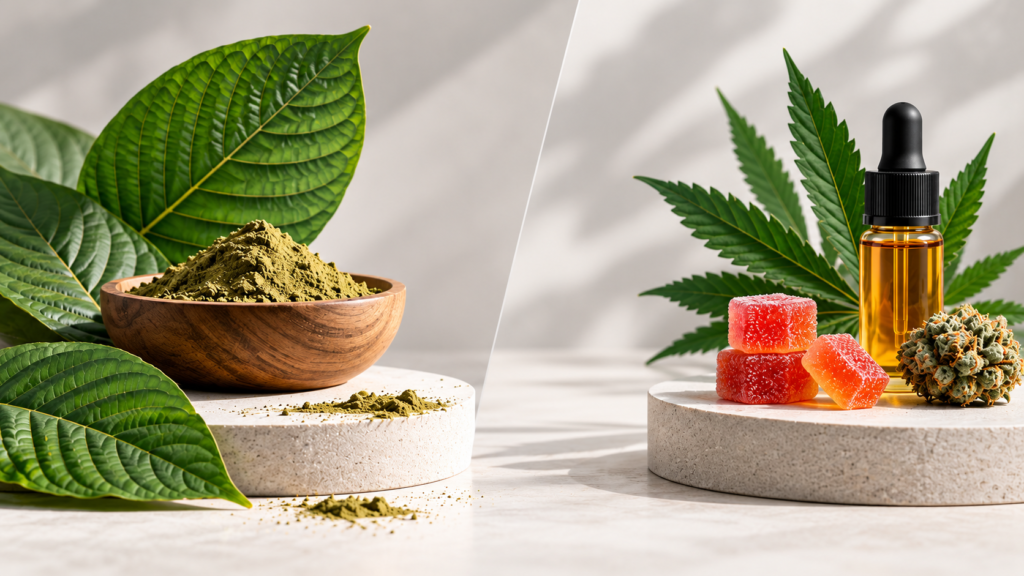
Scroll through enough wellness forums or plant-based product discussions online, and you’ll eventually see kratom and THC mentioned in the same breath. Both come from plants. Both have developed passionate, loyal followings. And both are frequently misunderstood by people who are just starting to research their options. But despite showing up in similar conversations, kratom and THC are fundamentally different substances, different plants, different chemistry, different legal frameworks, and different experiences entirely.
If you’re trying to figure out how kratom and THC actually compare, this guide breaks it all down in plain terms: what each one is, how people commonly use THC, what a kratom-and-THC comparison actually looks like side by side, and the side effects worth knowing about for each.
What Is THC?
THC is the primary psychoactive compound found in the cannabis plant, and it’s largely responsible for the effects people associate with marijuana. It’s worth noting that “THC” and “weed” aren’t quite the same thing, cannabis is the plant, and THC is simply one of many compounds contained within it, alongside others like CBD.
Delta 8 vs. Delta 9: The Two Most Common Forms
When people talk about THC, they’re often referring to one of two main variants:
- Delta 9 THC is the compound most people picture when they think of traditional cannabis. It’s the primary psychoactive ingredient in marijuana and is subject to the strictest regulation.
- Delta 8 THC is a hemp-derived variant that’s chemically similar to Delta 9 but is generally described as producing milder effects. Its legal status has been more flexible in some regions because of its derivation, though regulations continue to shift.
How THC Affects the Body
THC works primarily by binding to CB1 receptors, which are concentrated in the brain and central nervous system. This interaction is what produces the psychoactive effects commonly associated with cannabis use, everything from altered perception and relaxation to changes in appetite and mood.
How to Use THC: Common Consumption Methods
For those exploring THC in places where it’s legally available, there are several common ways it’s consumed. Each method comes with its own onset time, duration, and intensity, which is worth understanding before trying any of them.
- Smoking or vaping dried cannabis flower or concentrates is the most traditional method. Effects tend to appear within minutes but fade more quickly than with other forms.
- Edibles, such as gummies, chocolates, or infused baked goods, are metabolized through the digestive system rather than inhaled. This means effects take considerably longer to appear, often 30 minutes to two hours, but they also tend to last much longer once they do kick in.
- Tinctures and oils are typically taken sublingually (under the tongue), offering a middle ground between the fast onset of smoking and the long duration of edibles.
- Topicals, like lotions or balms infused with THC, are applied directly to the skin and are generally used for localized effects rather than the psychoactive experience associated with other methods.
- Capsules offer a more standardized, pre-measured approach, similar in concept to how kratom capsules provide consistent dosing without measuring loose powder.
What Is Kratom?
Kratom, as mentioned, comes from the leaves of Mitragyna speciosa, a tree that has been part of daily life and traditional practices in Southeast Asian countries like Thailand, Malaysia, and Indonesia for generations. Locally, the leaves have historically been chewed fresh or brewed into teas.
In Western markets, kratom is more commonly sold as a dried, powdered leaf, which can then be encapsulated, brewed, or processed into other formats like extracts, gummies, or tinctures. Its two primary active alkaloids, mitragynine and 7-hydroxymitragynine, interact with opioid receptors in the body, though kratom itself is not an opioid and comes from an entirely different plant family than substances like poppy-derived opioids.
Kratom and THC: A Direct Comparison
Now that we’ve covered each substance individually, here’s how kratom and THC actually stack up against one another across the factors that matter most.
| Feature | Kratom | THC |
| Plant source | Mitragyna speciosa tree leaf | Cannabis plant |
| Active compounds | Alkaloids (mitragynine, 7-hydroxymitragynine) | Cannabinoid (tetrahydrocannabinol) |
| Category | Non-cannabis botanical | Cannabis-derived compound |
| How it interacts with the body | Engages opioid-like receptors | Engages CB1 receptors in the endocannabinoid system |
| Common formats | Powder, capsules, gummies, tinctures, tea | Flower, edibles, vapes, tinctures, capsules |
| Legal status | Legal in most U.S. states, banned in a handful, some local restrictions | Federally restricted; legality varies significantly by state and product type |
| Drug testing | Not included in standard drug test panels | Commonly detected on standard drug tests |
Different Plants, Different Chemistry
The most fundamental difference is also the simplest: kratom and THC don’t share any chemical lineage. Kratom’s alkaloids and THC’s cannabinoid structure are entirely distinct classes of compounds, which means they don’t interact with the body in the same way, and they shouldn’t be assumed to produce comparable effects just because they’re both plant-derived.
Different Legal Landscapes
Legal status is one of the starkest contrasts between the two. Kratom is legal at the federal level in the United States and legal in the majority of individual states, with a handful of exceptions (including Alabama, Arkansas, Indiana, Rhode Island, Vermont, and Wisconsin) along with scattered local restrictions in certain counties and cities.
Different Contexts of Use
Kratom is frequently discussed as a non-cannabis alternative for people specifically looking to avoid THC altogether, whether for personal preference, workplace drug testing concerns, or simply wanting to steer clear of cannabis products. THC, meanwhile, is generally sought out by people specifically interested in the cannabis experience, whether for recreational purposes or otherwise, in places where it’s legally accessible.
Drug Testing Considerations
This is a practical distinction that matters a great deal to many people: standard workplace and pre-employment drug tests are typically designed to detect THC metabolites, and a positive result for THC can carry real consequences. Kratom’s alkaloids are not part of standard drug test panels, which is one of the main reasons people who are subject to regular testing gravitate toward kratom instead of cannabis products.
Side Effects of THC
Like any psychoactive substance, THC comes with a range of potential side effects, and individual experiences can vary considerably depending on dosage, method of consumption, and personal tolerance.
Commonly reported THC side effects include:
- Dry mouth and dry, red eyes: Among the most frequently reported physical effects
- Increased heart rate: This can be more pronounced in people who are new to THC or who consume higher amounts
- Impaired short-term memory and concentration: Particularly noticeable during the period when effects are most active
- Anxiety or paranoia: Especially at higher doses or in people who are particularly sensitive to THC’s psychoactive effects
- Impaired coordination and reaction time: Which is why operating a vehicle or machinery under the influence of THC carries real safety risks
- Increased appetite: Commonly referred to informally as “the munchies”
- Drowsiness or lethargy: Particularly with indica-leaning strains or higher-dose edibles
Side Effects of Kratom
Kratom carries its own set of potential side effects, many of which are dose-dependent, meaning they tend to become more pronounced at higher amounts.
Commonly reported kratom side effects include:
- Nausea or upset stomach: particularly common for new users or with higher amounts
- Dizziness: especially when starting out or increasing an amount too quickly
- Dry mouth: similar to a side effect also seen with THC
- Constipation: a fairly common digestive effect tied to kratom’s interaction with opioid-like receptors
- Drowsiness or, conversely, restlessness: depending on strain and amount used
- Headaches: reported by some users, particularly with frequent or heavy use
- Loss of appetite: especially in the hours following use
Can You Use Kratom and THC Together?
This is a common question, and the honest answer is that there’s limited formal research on combining the two substances, and individual responses can vary significantly from person to person. Because kratom and THC affect entirely different receptor systems in the body, combining them introduces more variables and unknowns rather than fewer.
As a general rule of thumb, it’s wise to avoid combining any two substances, plant-based or otherwise, unless you already understand how each one affects you individually. If you’re new to either kratom or THC, it’s safer to try them separately first, pay attention to how your body responds, and keep your routine as simple as possible while you’re still learning your own tolerance.
How to Choose Between Kratom and THC
Deciding between kratom and THC really comes down to personal circumstances, preferences, and local legality, rather than one being objectively “better” than the other.
Kratom might be the better fit if you:
- Want to avoid cannabis-derived products entirely
- Are subject to routine drug testing and need to avoid THC specifically
- Prefer a botanical option with flexible formats like powder, capsules, or gummies
- Live somewhere kratom is legal but THC is not
THC might be the better fit if you:
- Are specifically interested in a cannabis-based experience
- Live in a state where THC is legally available, whether medically or recreationally
- Have researched and are comfortable with THC’s psychoactive effects and legal considerations
- Are not subject to drug testing that would be affected by THC use
Why Quality and Sourcing Matter for Both
Regardless of which option you’re considering, where you source it from matters just as much as what you’re sourcing. The plant-based product industry, both kratom and cannabis, has seen its share of quality control issues, from contaminated batches to inaccurate labeling.
For kratom specifically, look for vendors who provide third-party lab testing results, disclose alkaloid content, and are transparent about sourcing and manufacturing practices. For THC products, especially in states where cannabis is legally regulated, purchasing from licensed dispensaries rather than unregulated sources helps ensure the product has been tested for potency and contaminants like pesticides or heavy metals.
Final Thoughts
Kratom and THC may both come up in conversations about plant-based products, but that’s largely where the similarities end. One is a tropical tree leaf containing naturally occurring alkaloids; the other is a specific cannabinoid compound extracted from cannabis. They interact with entirely different systems in the body, carry very different legal statuses depending on where you live, and come with their own distinct sets of potential side effects.
If you’re trying to decide between the two, or simply trying to understand what makes them different in the first place, the most important takeaway is this: they’re not interchangeable, and they’re not really in competition with one another. They’re two separate categories of plant-based products, each with its own considerations, and understanding those differences is the first step toward making an informed decision about what’s right for you.
As always, if you’re considering trying kratom, THC, or any new substance for the first time, do your research, check your local laws, choose reputable and transparent sources, and consult a healthcare provider if you have any underlying health conditions or take prescription medications. Being informed is the best way to approach either option responsibly.